


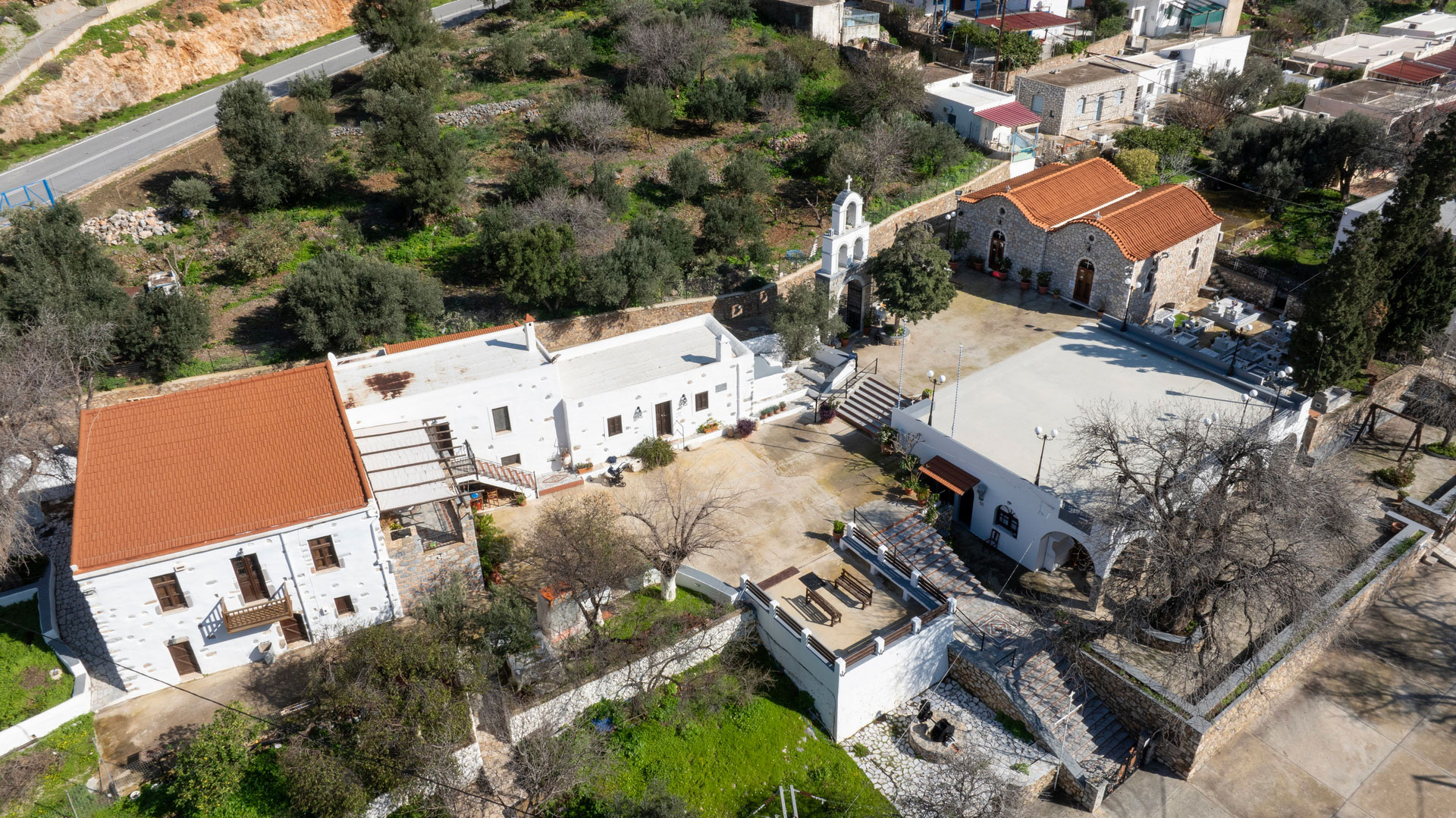
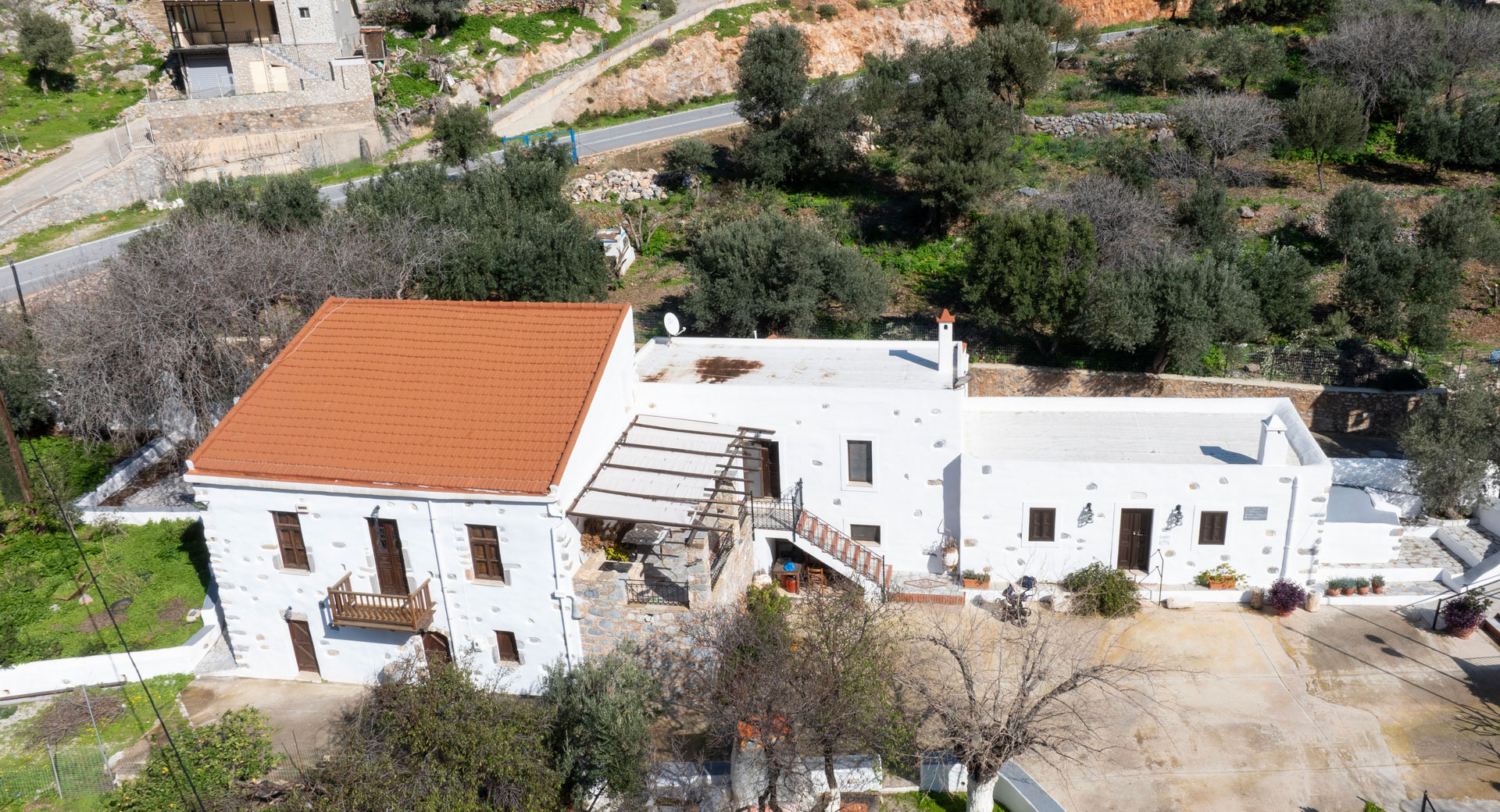
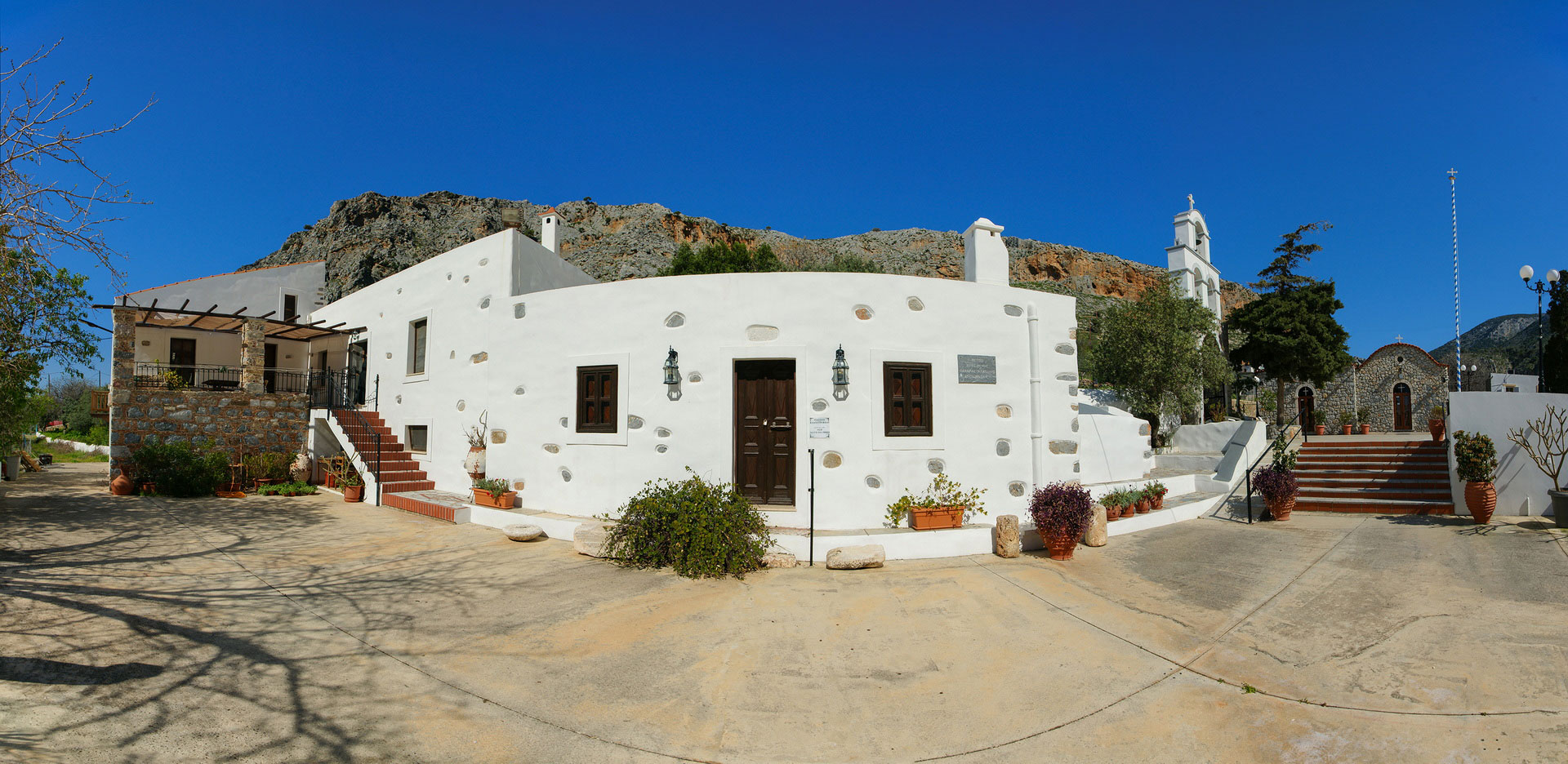
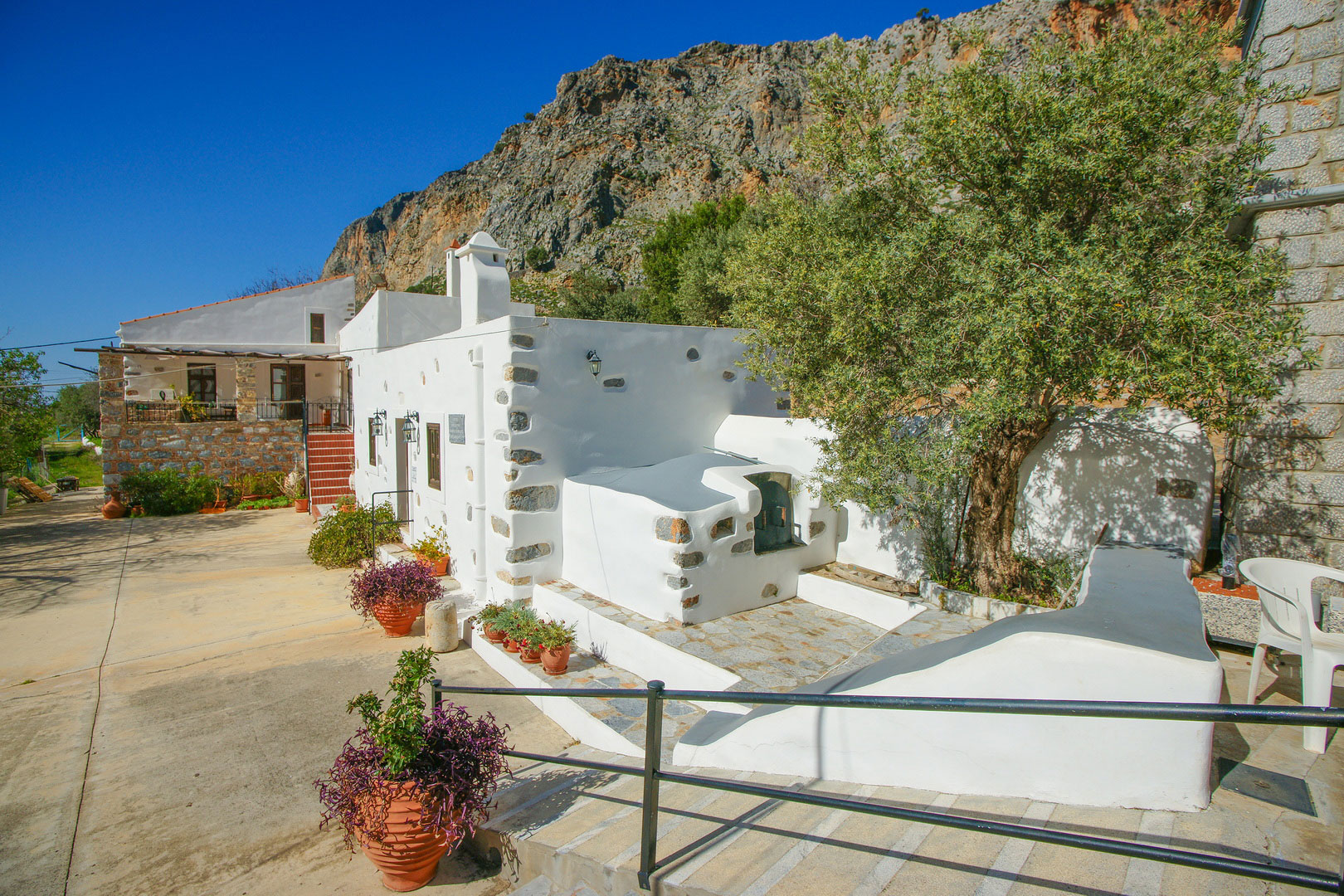
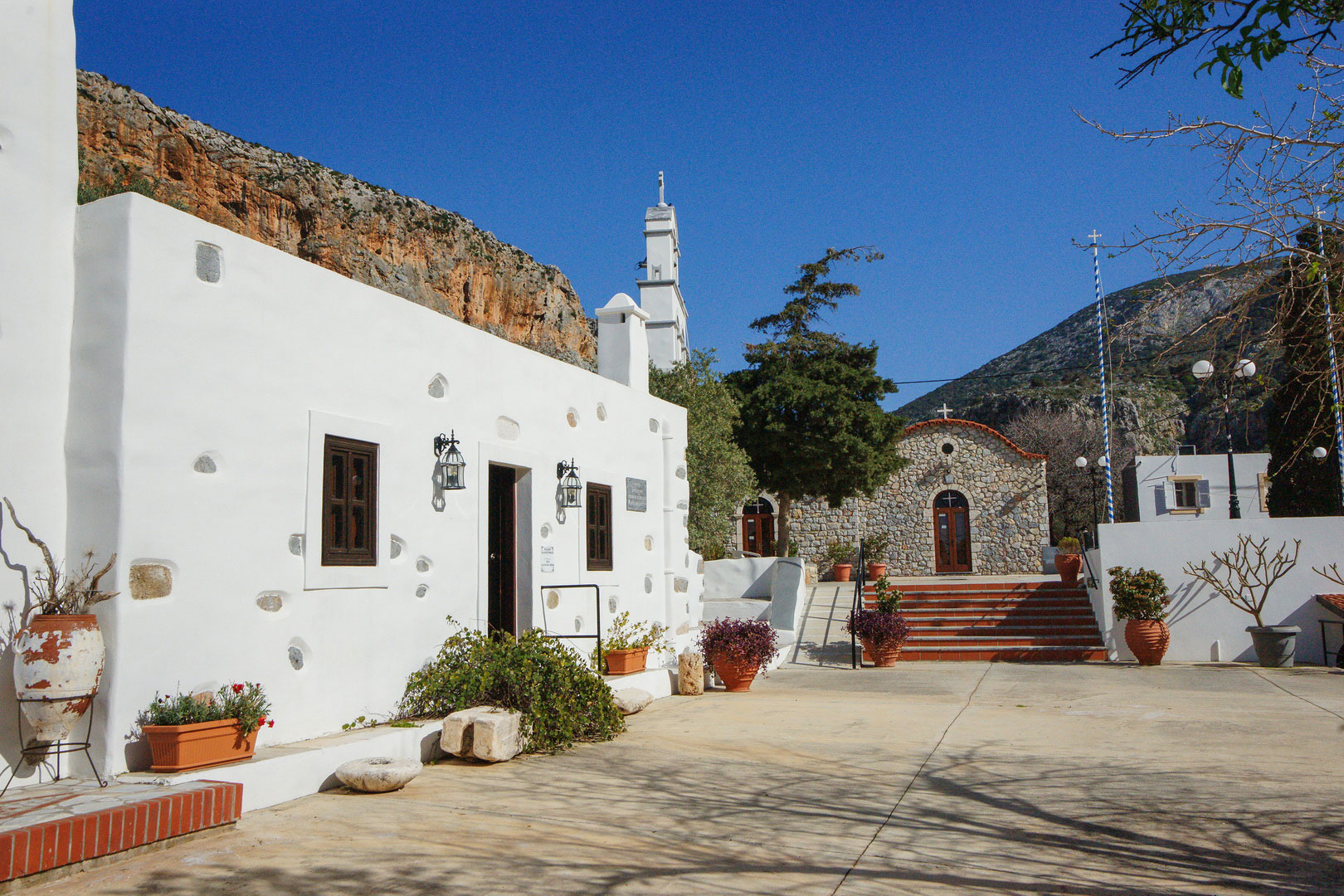
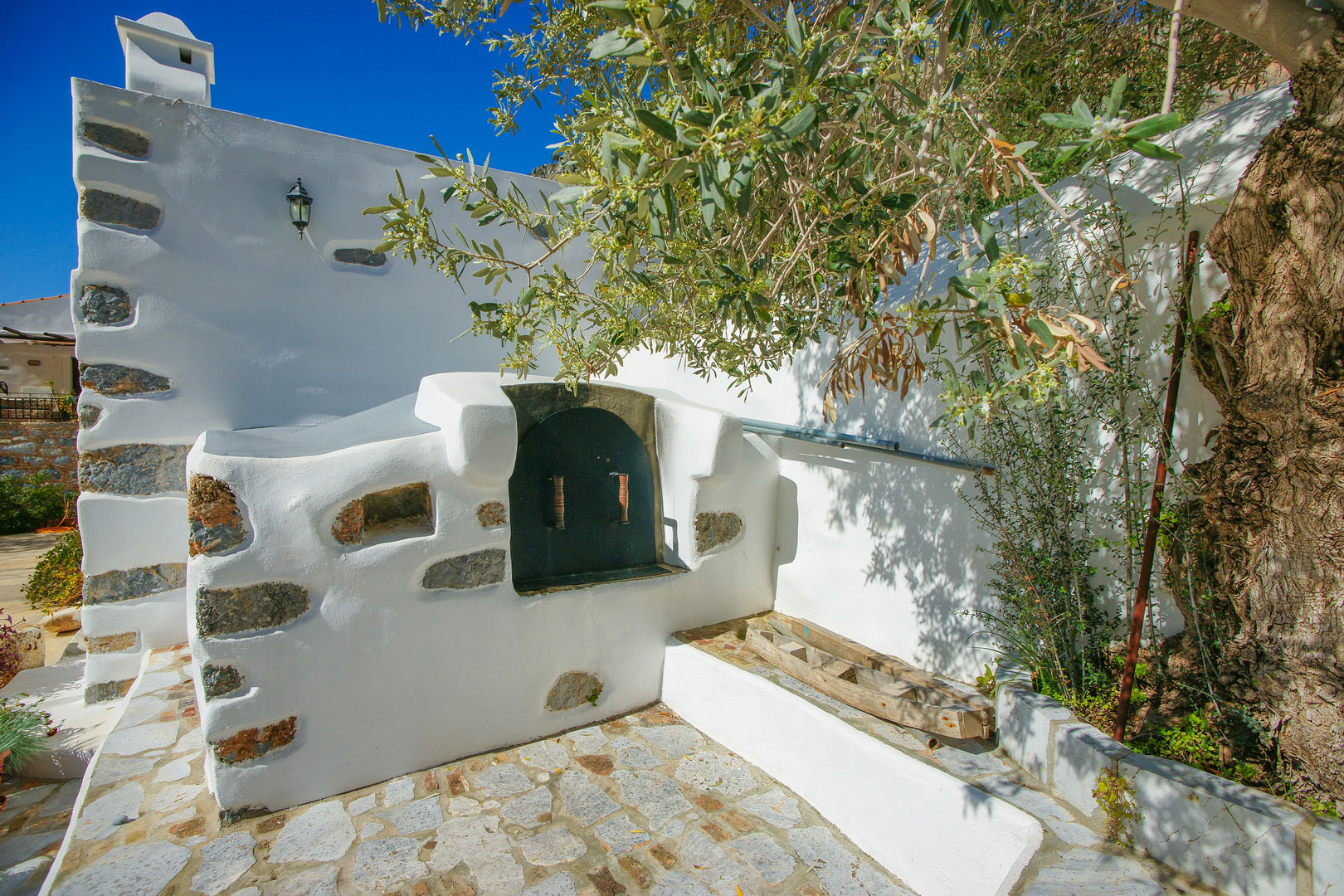
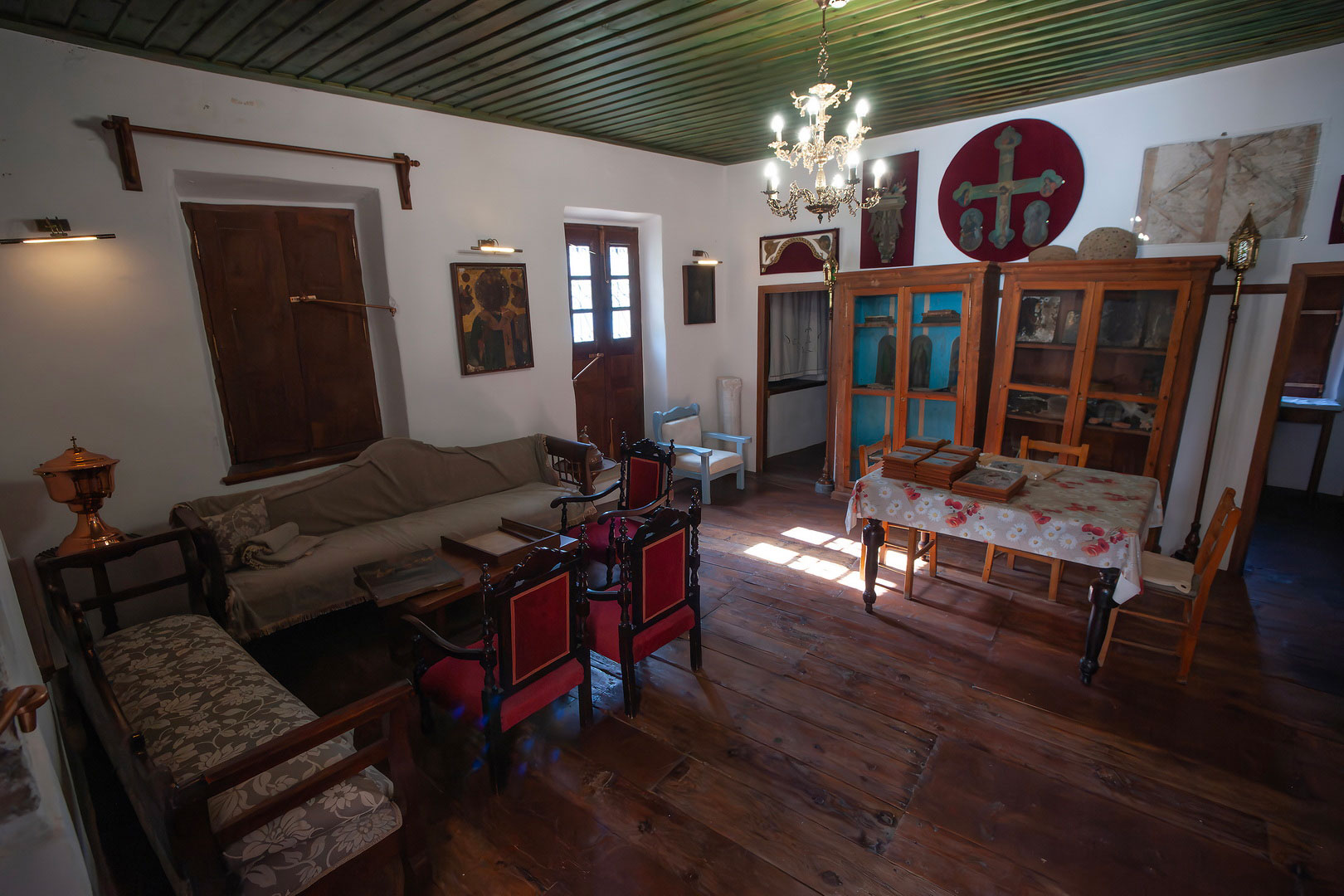
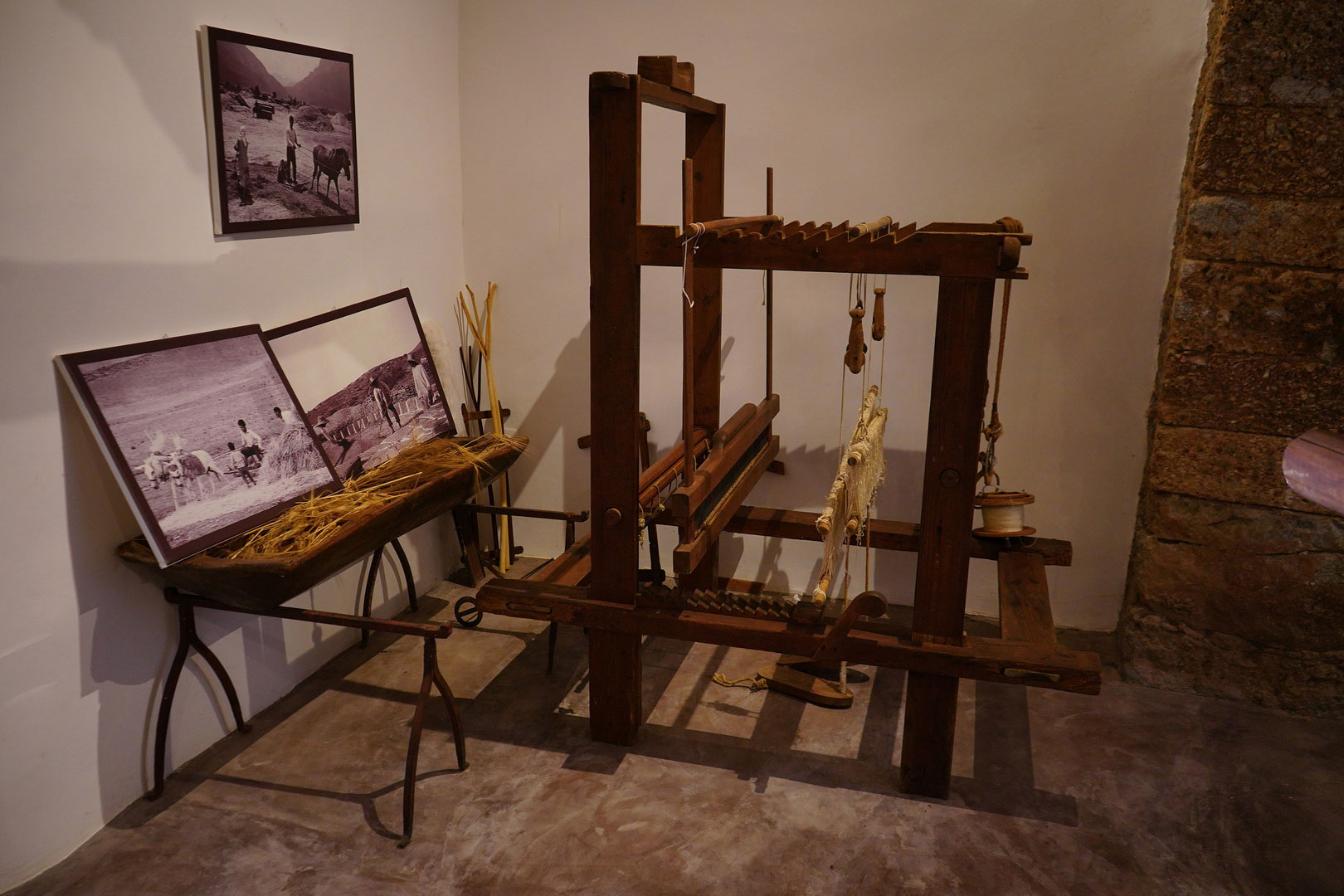
The Monastery of Panagia Galatiani is located in the northwestern part of the seaside settlement of Arginonta. The complex includes, in its western section, the two-story residence of the priest, a two-story building with an Ontas guestroom on the upper floor and storage spaces on the ground floor, an olive mill, a built oven, an outdoor winepress, and a horse mill for grinding grains. The first buildings date back to 1680, as evidenced by the date on the lintel of one of the two entrances to the ground-floor storage rooms.
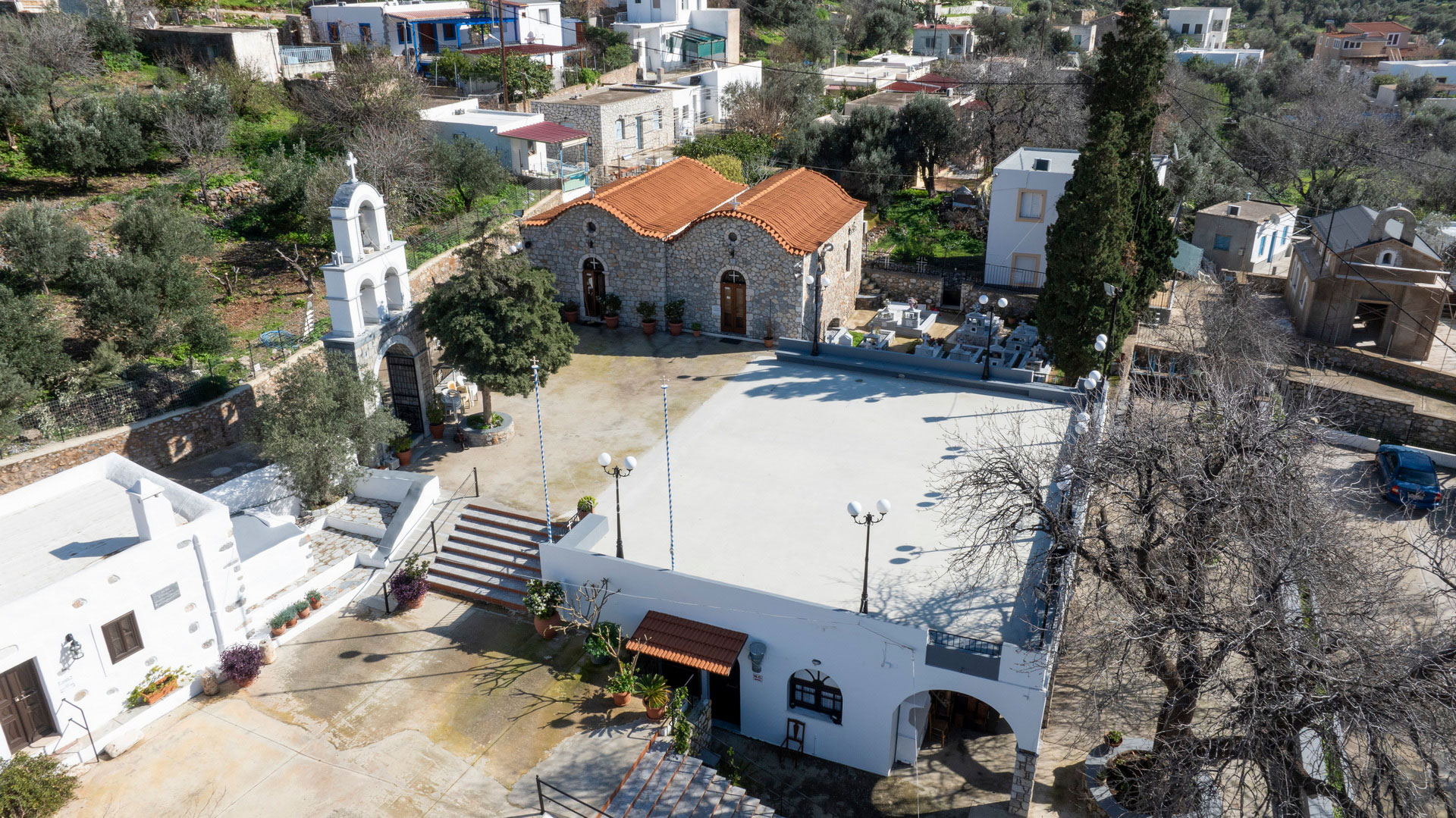
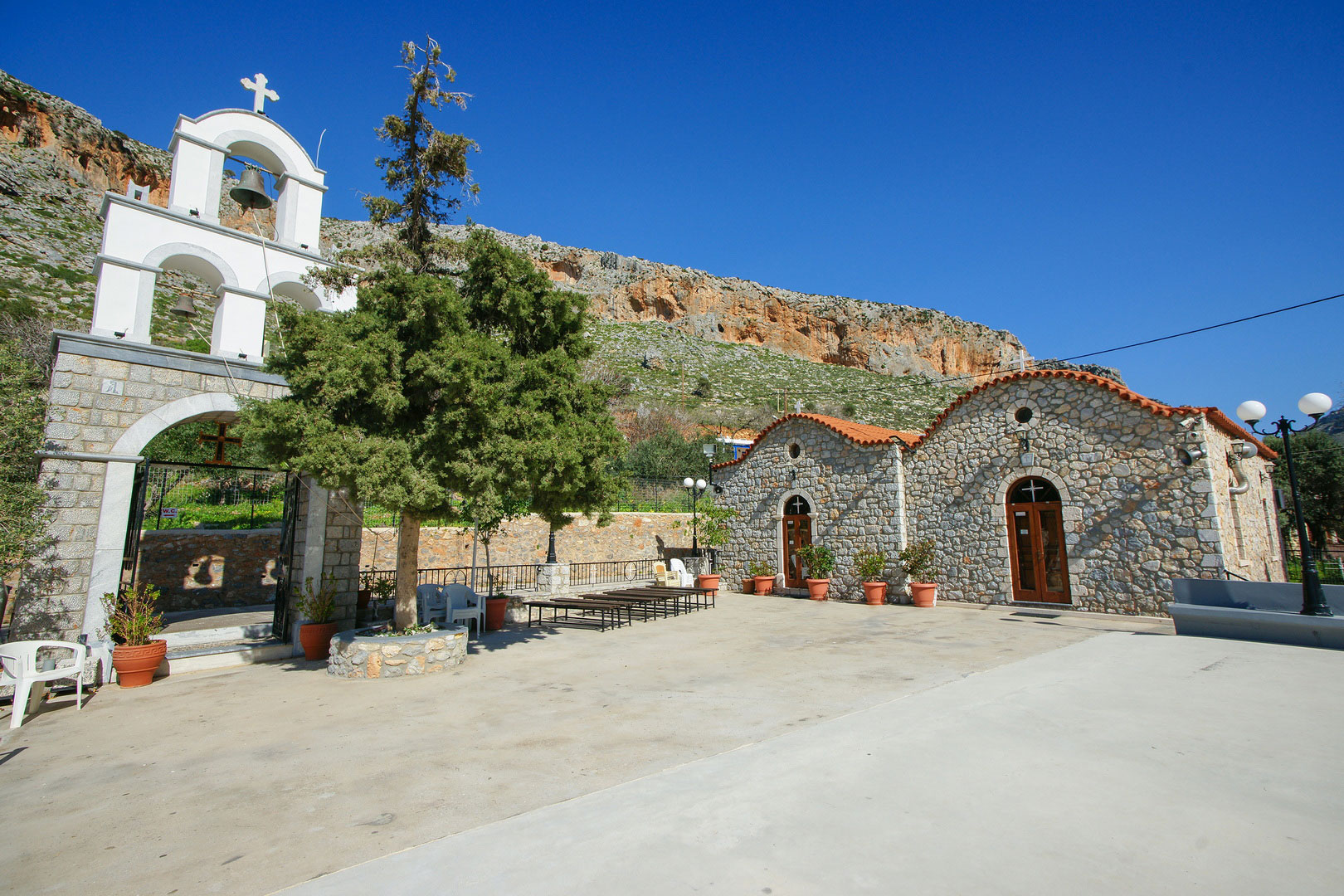
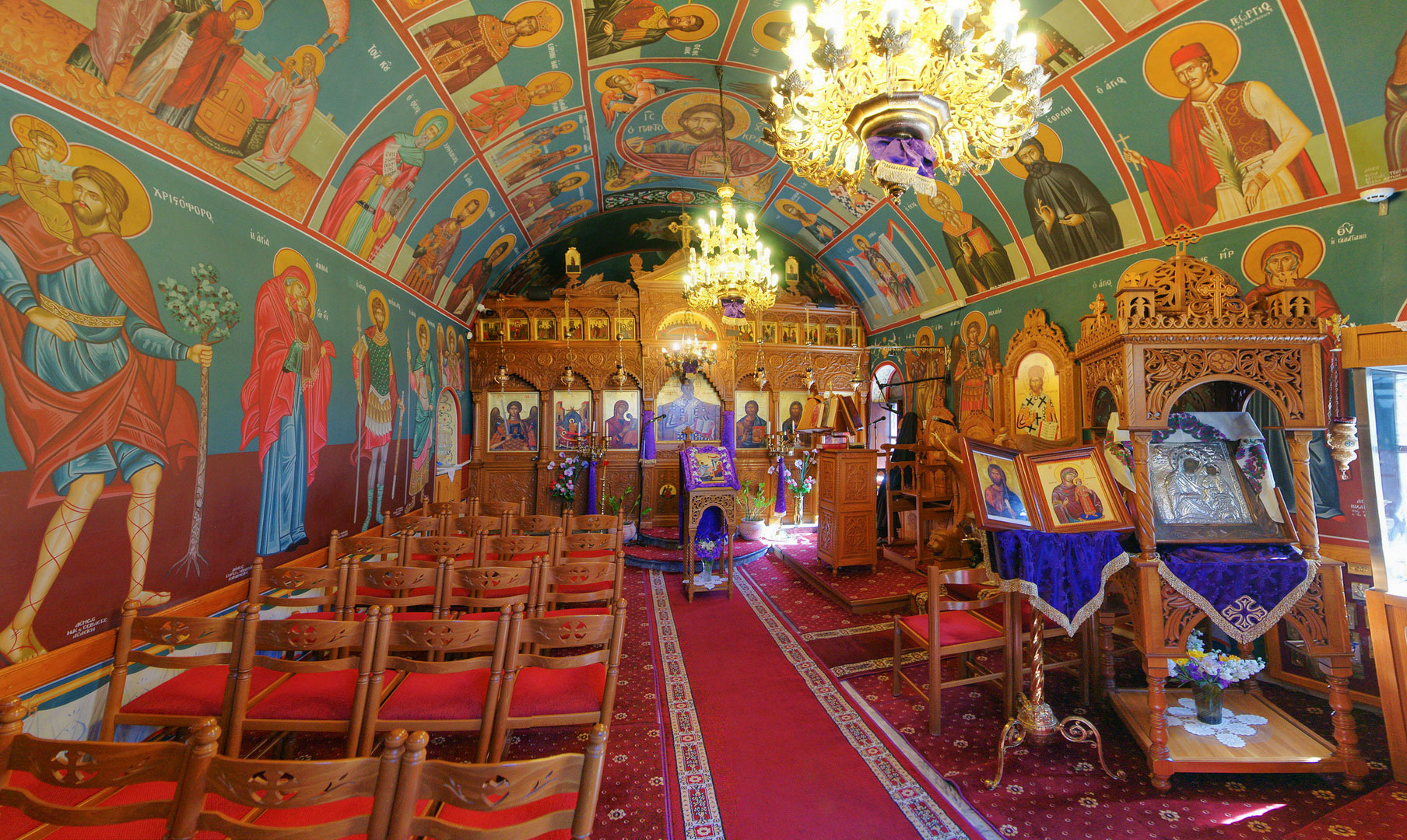
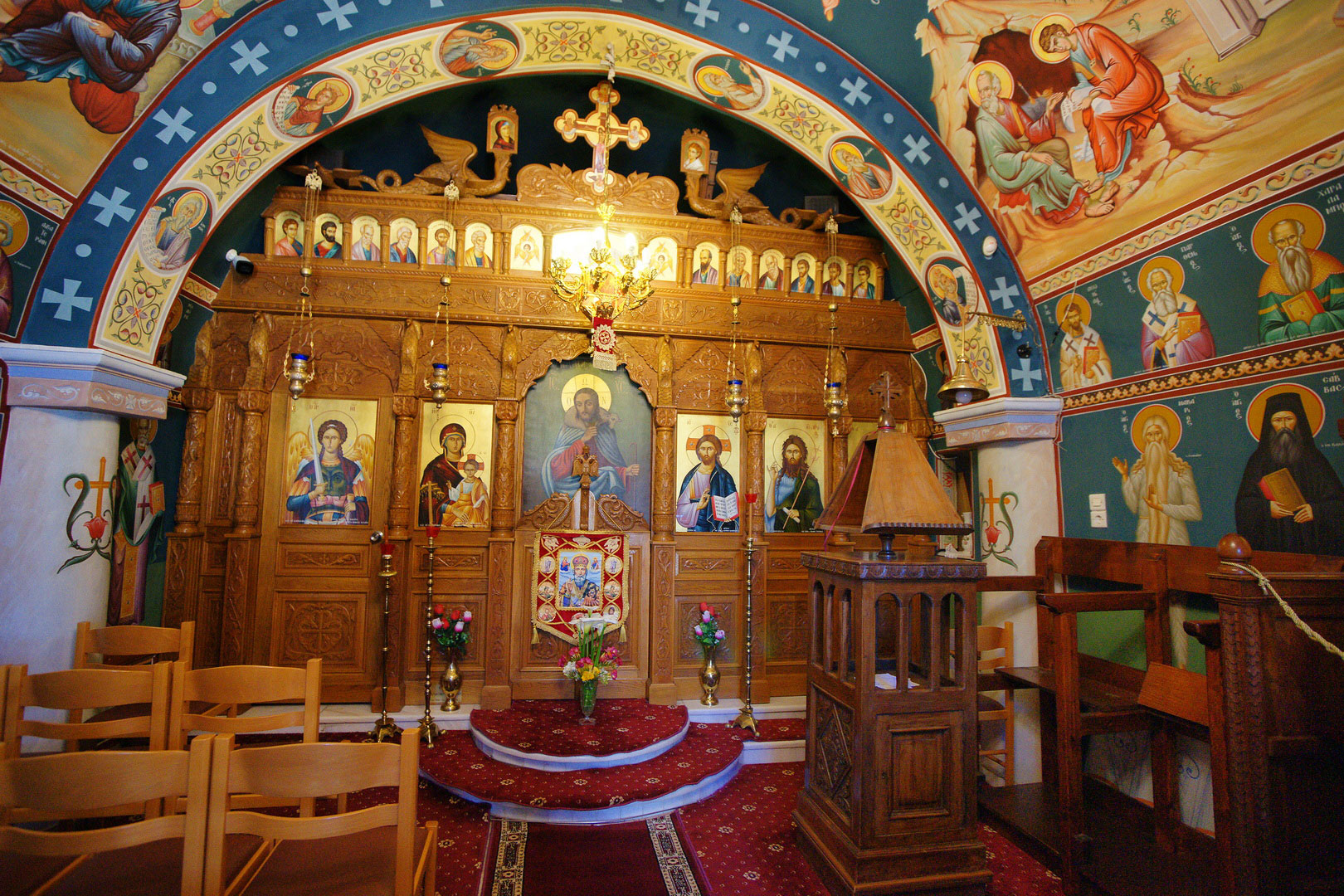
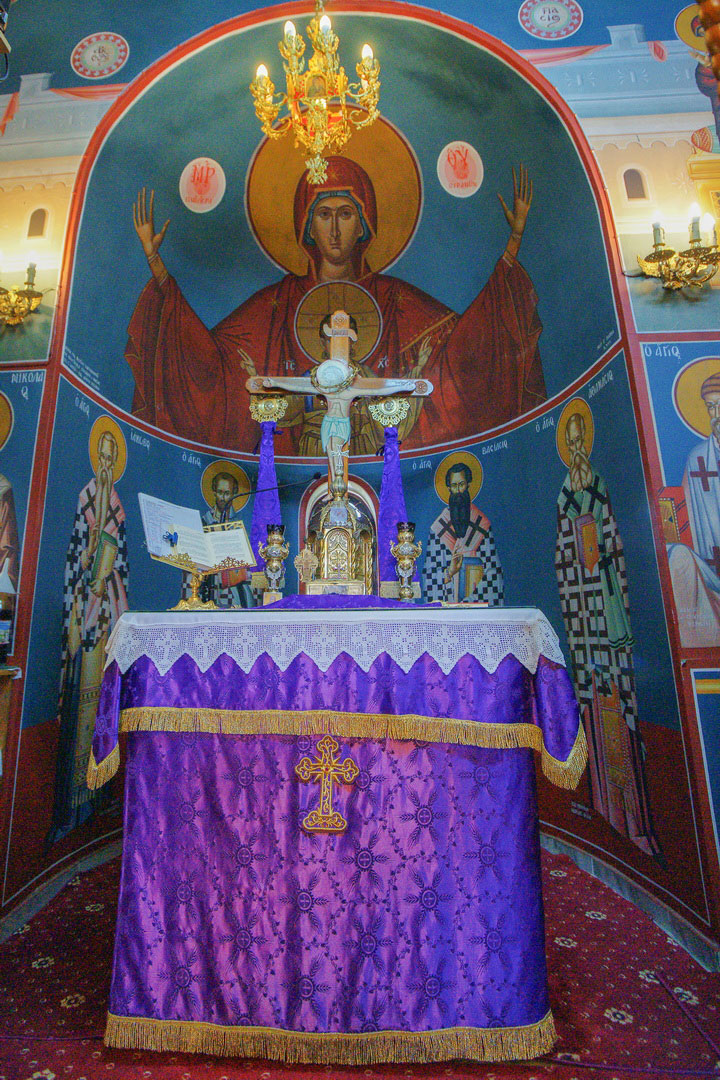
A few meters to the east of the buildings are the adjacent churches of Saint Nicholas and the Dormition of the Virgin Mary. Saint Nicholas, the older of the two, was built around 1800, while the Church of the Dormition of the Virgin Mary is much newer, dating to 1994.
Between the churches and the other buildings, an impressive bell tower was built seven years ago. In front of the churches, a spacious cement-paved courtyard has been created by leveling the sloping land to accommodate the congregation. Below this courtyard, a parish event hall was constructed.
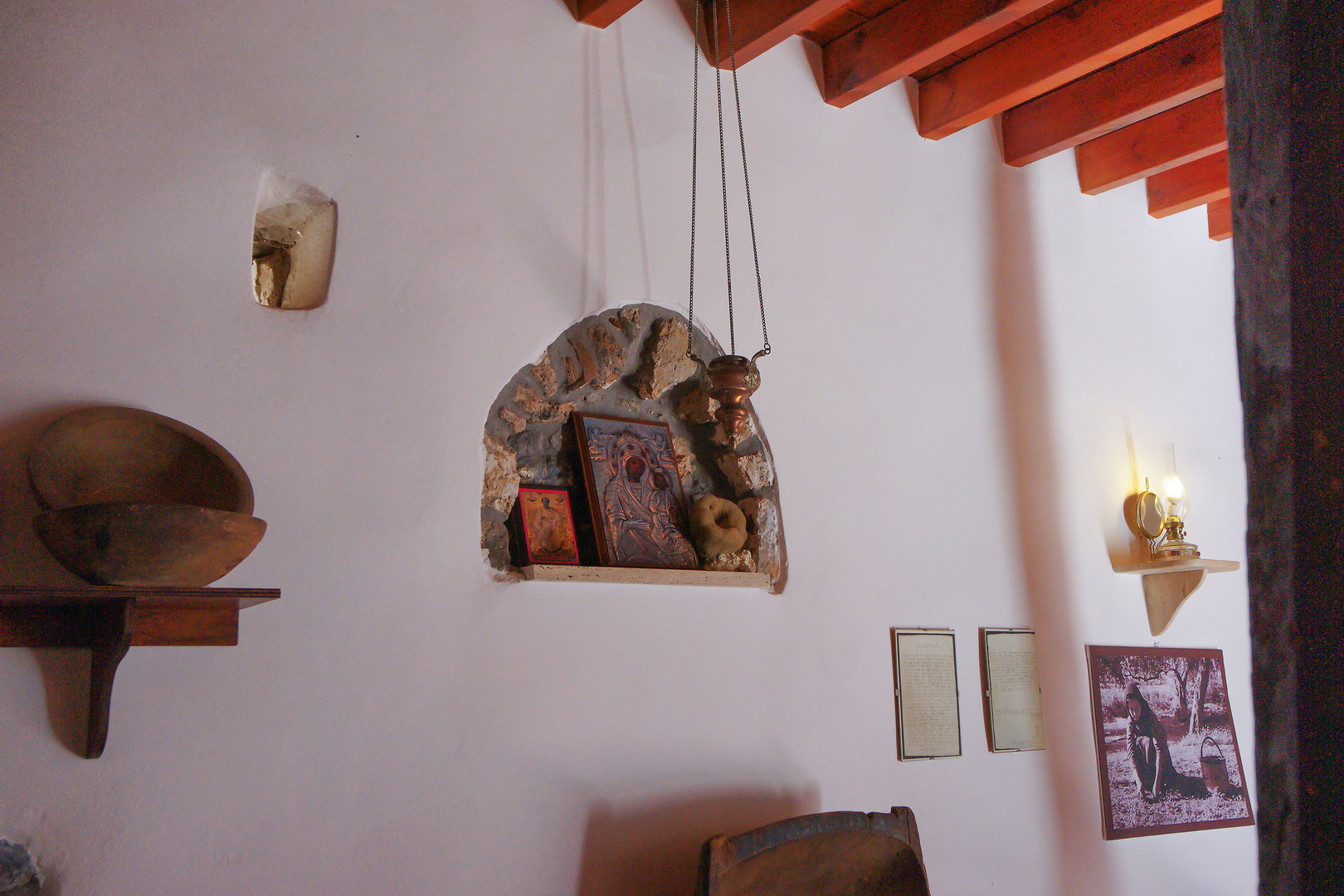
The silver-plated icon of the Virgin Mary holding the Child of Galatiani is a work from the early 19th century. At the top of its covering, there is an inscription stating that the silver plating took place in 1826, during the tenure of Bishop Ieremias and Abbot Germanos, by the craftsman Sebastos. Every year, on the ninth day after the Dormition of the Virgin Mary, the icon is carried by the faithful to the top of the Galatiani mountain range. There, Vespers and the Divine Liturgy are held in the chapel of Panagia, which is built within the Byzantine fortified settlement located there.
The Olive Mill is the easternmost building of the complex. Above its entrance, there is an embedded engraved marble inscription, which refers to its construction:
Constructed during the time of I. N. D. Pontikos, at the expense of D. S. Zervos, 1897
According to a relevant document from the Council of Elders of Kalymnos, dated April 21, 1897, when the priest N. D. Pontikos was leasing the monastery's land, the sponge merchant Daniel S. Zervos (1851–1919) spent the amount of 6,680 groschen on repair works for the monastery.
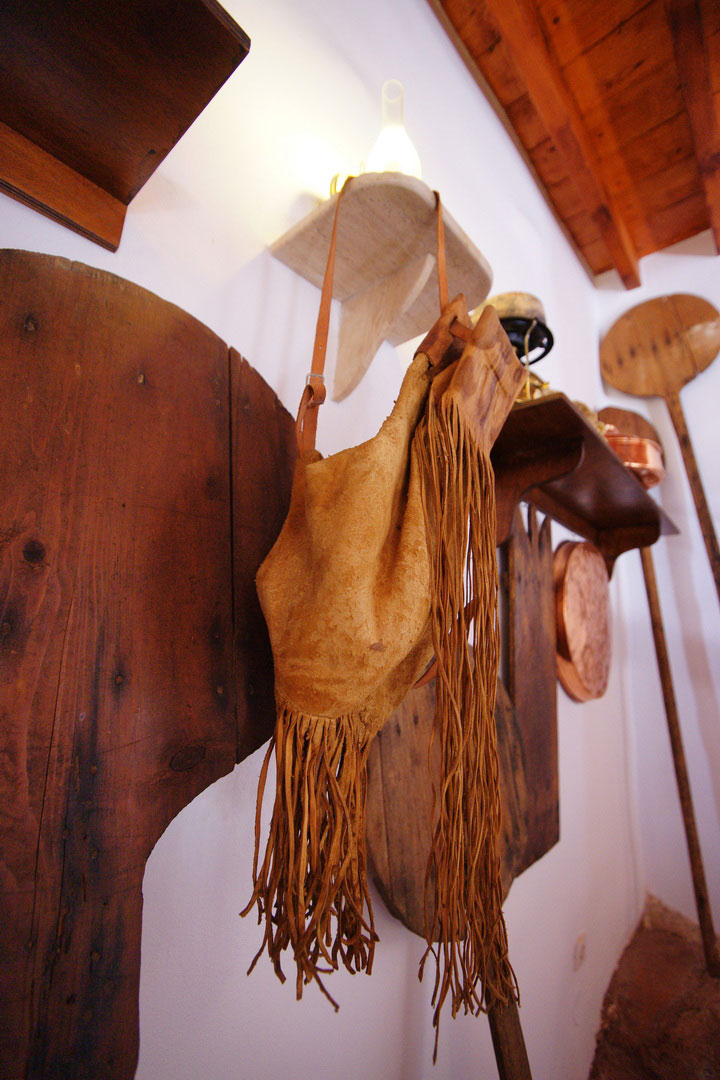
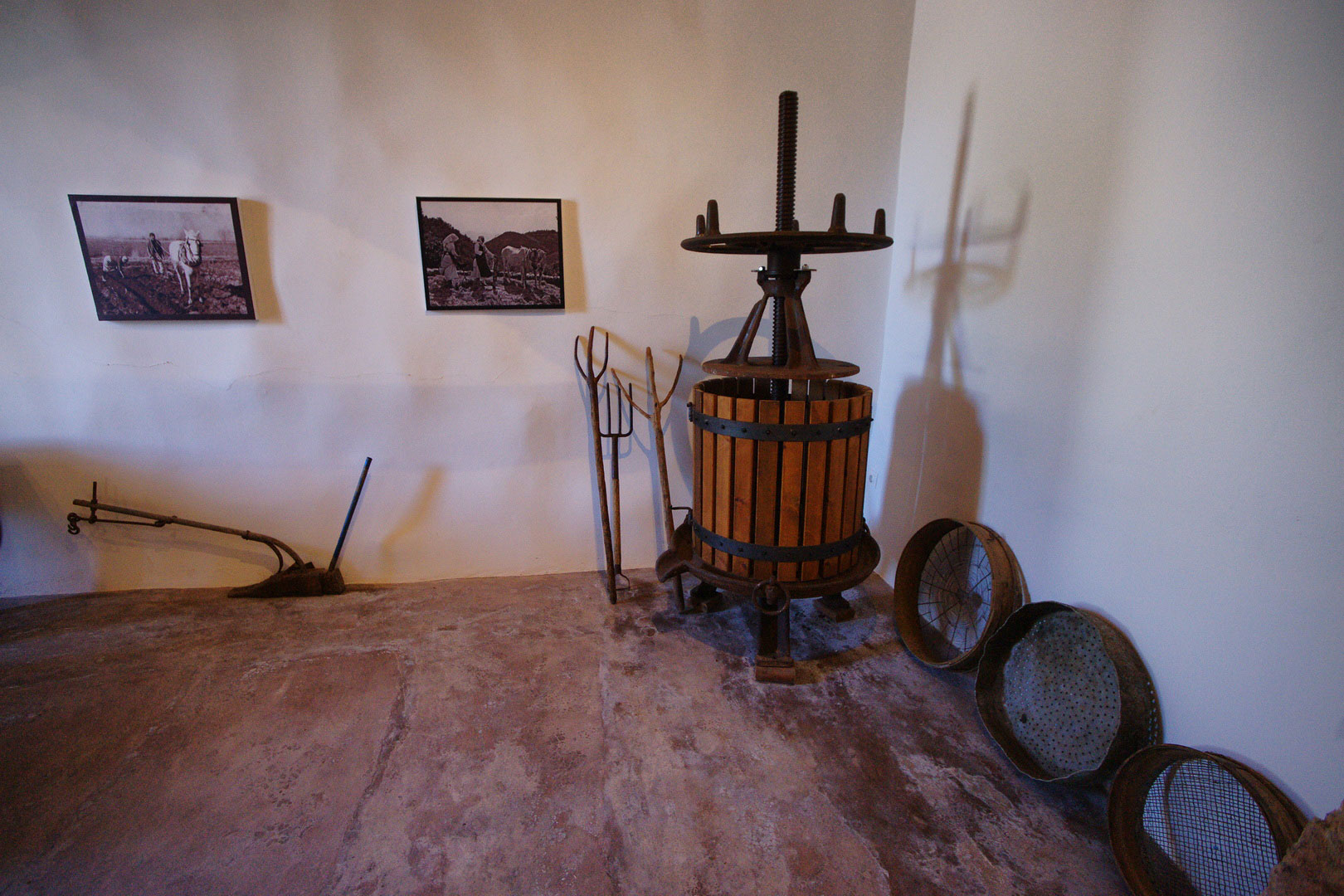
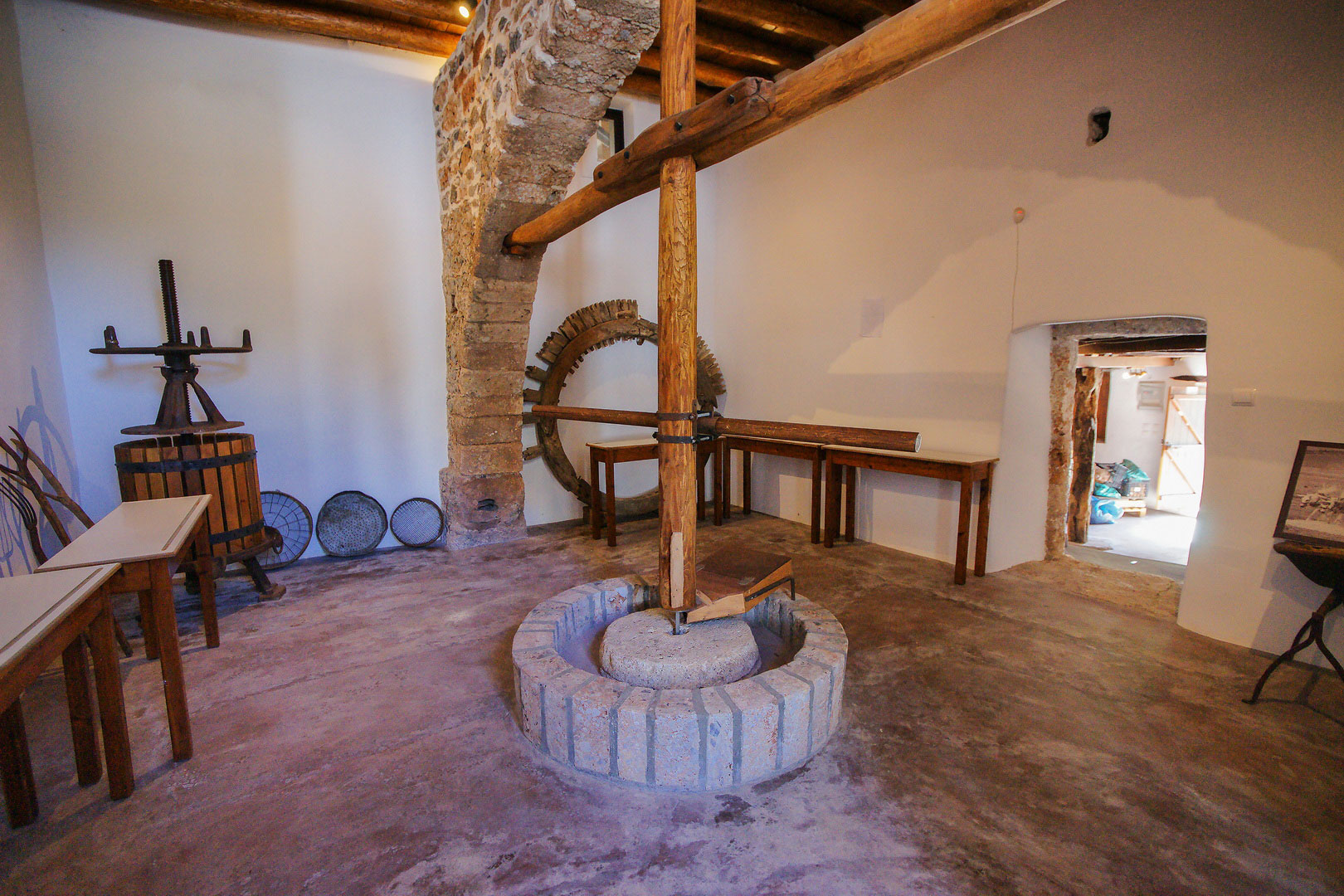
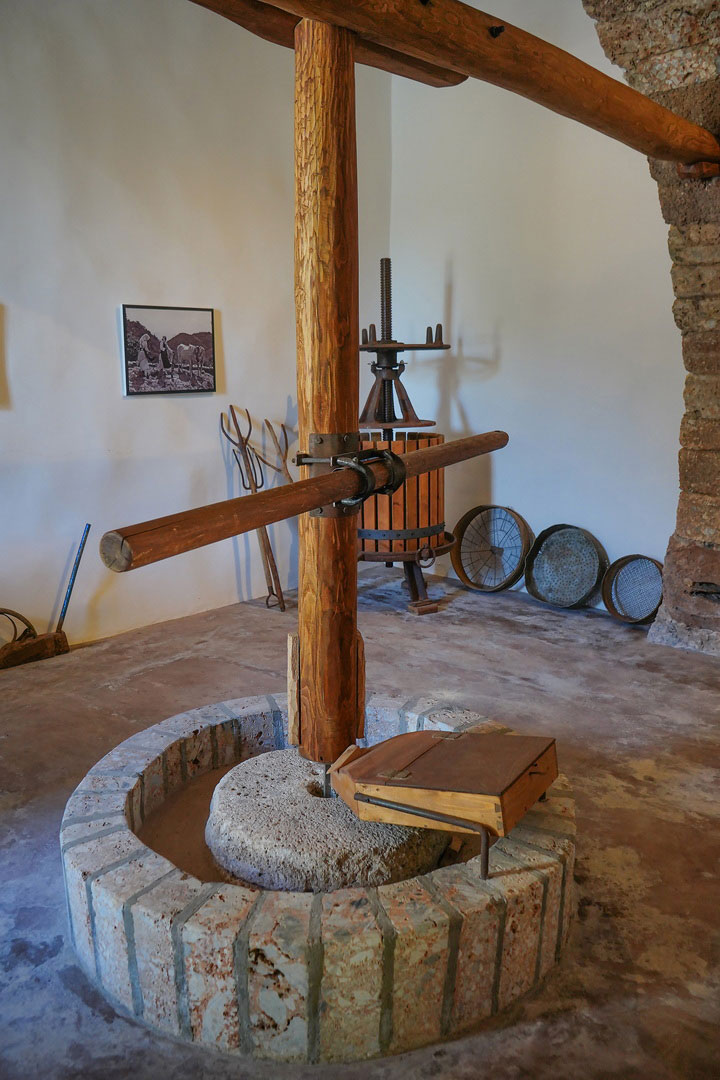
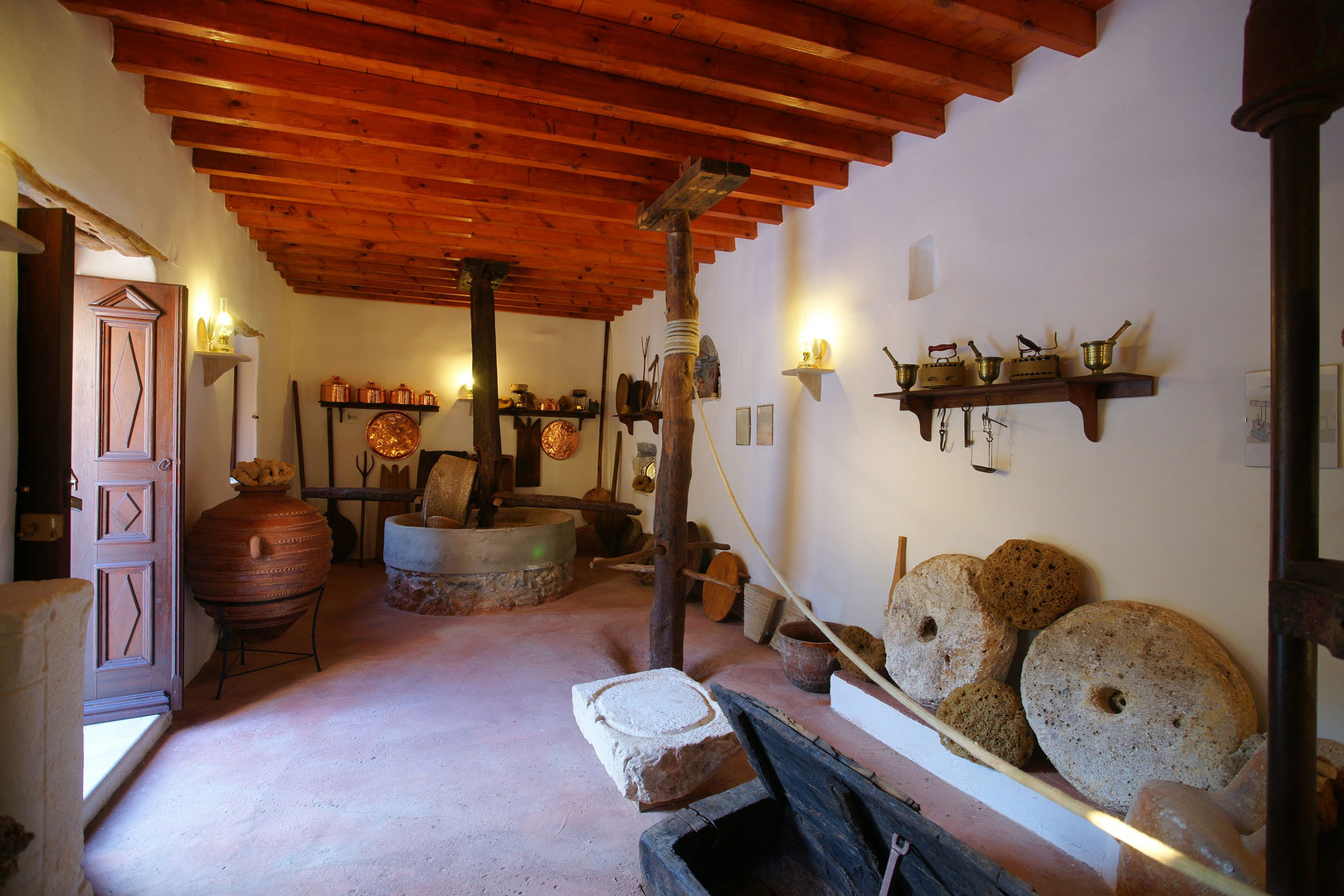
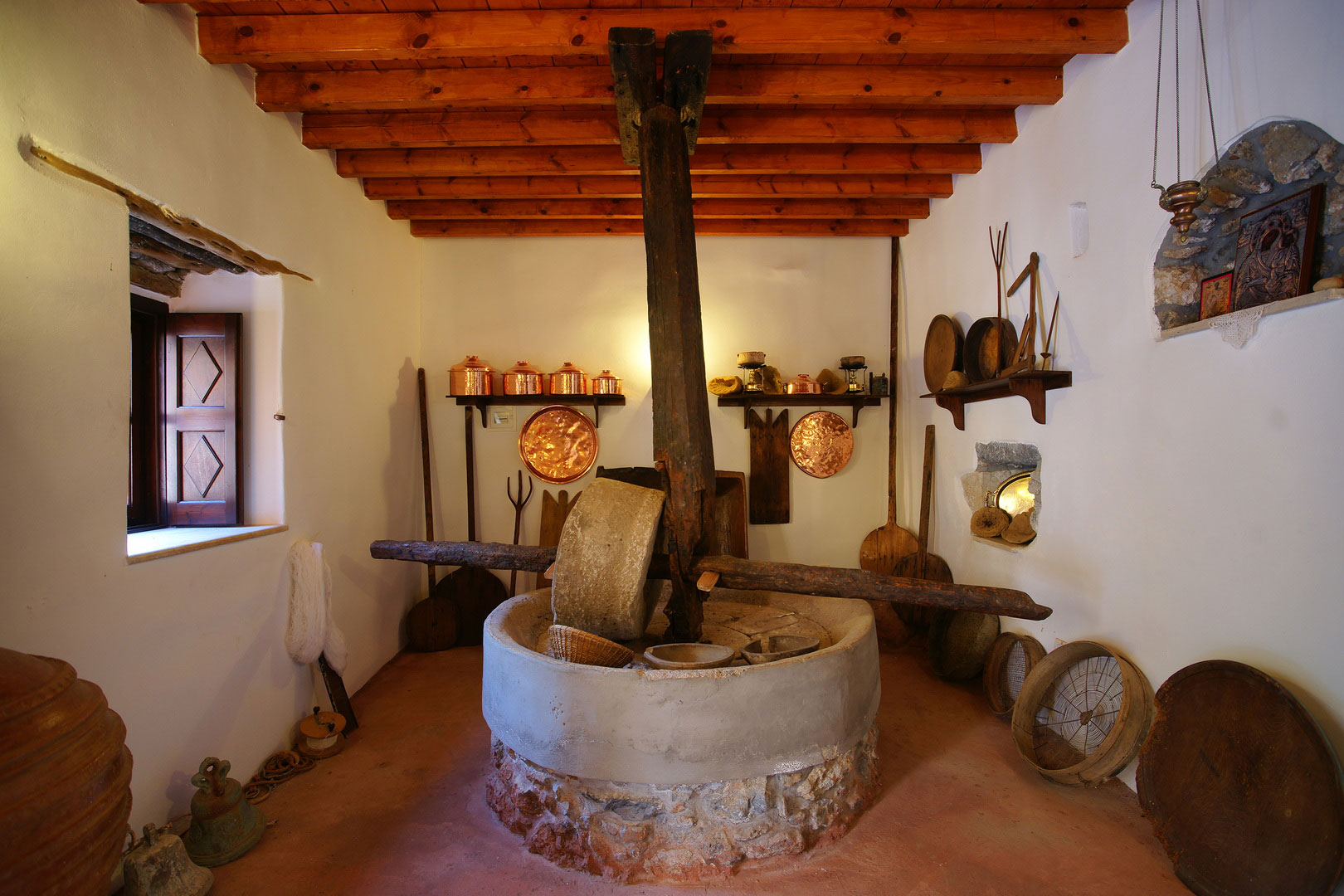
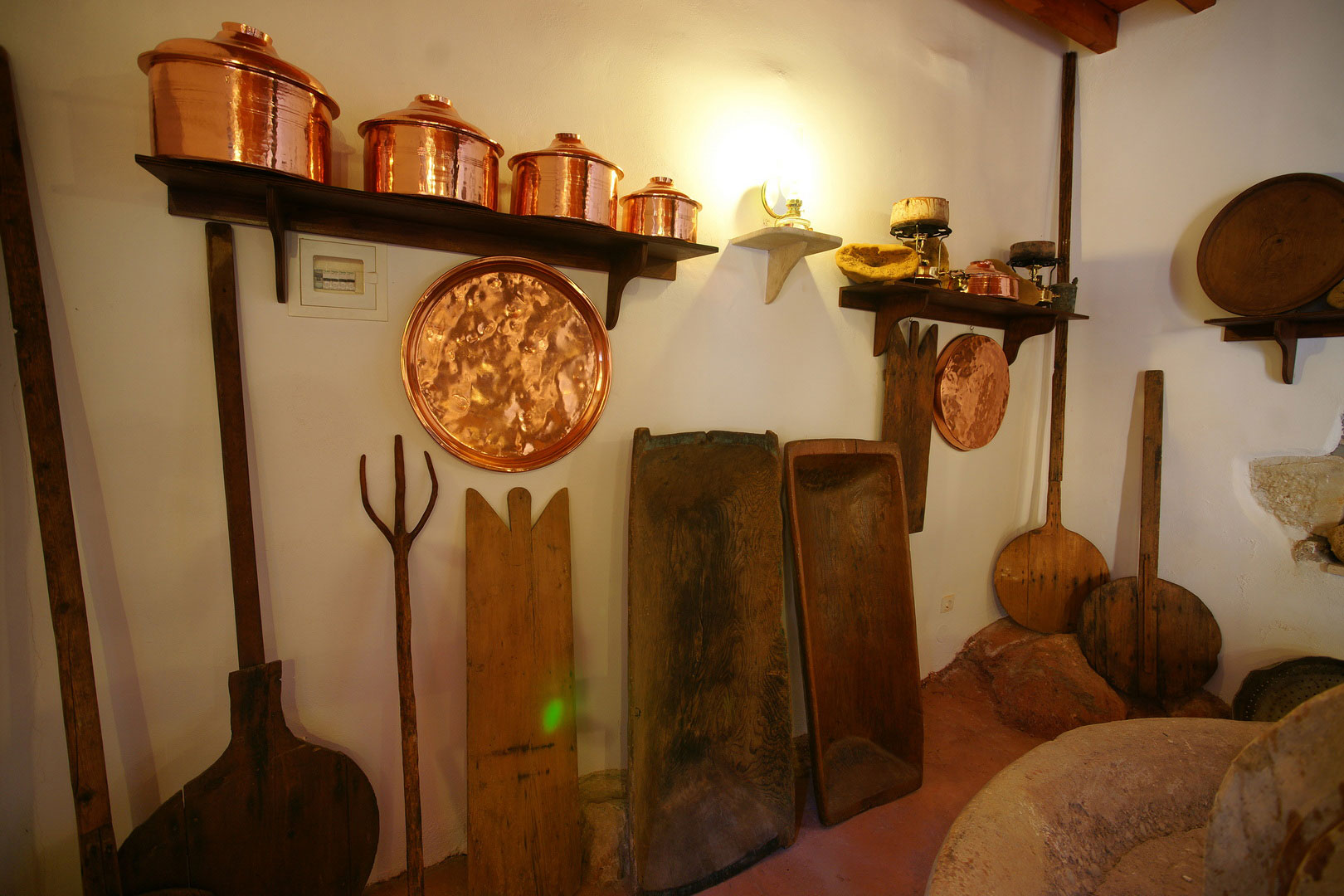
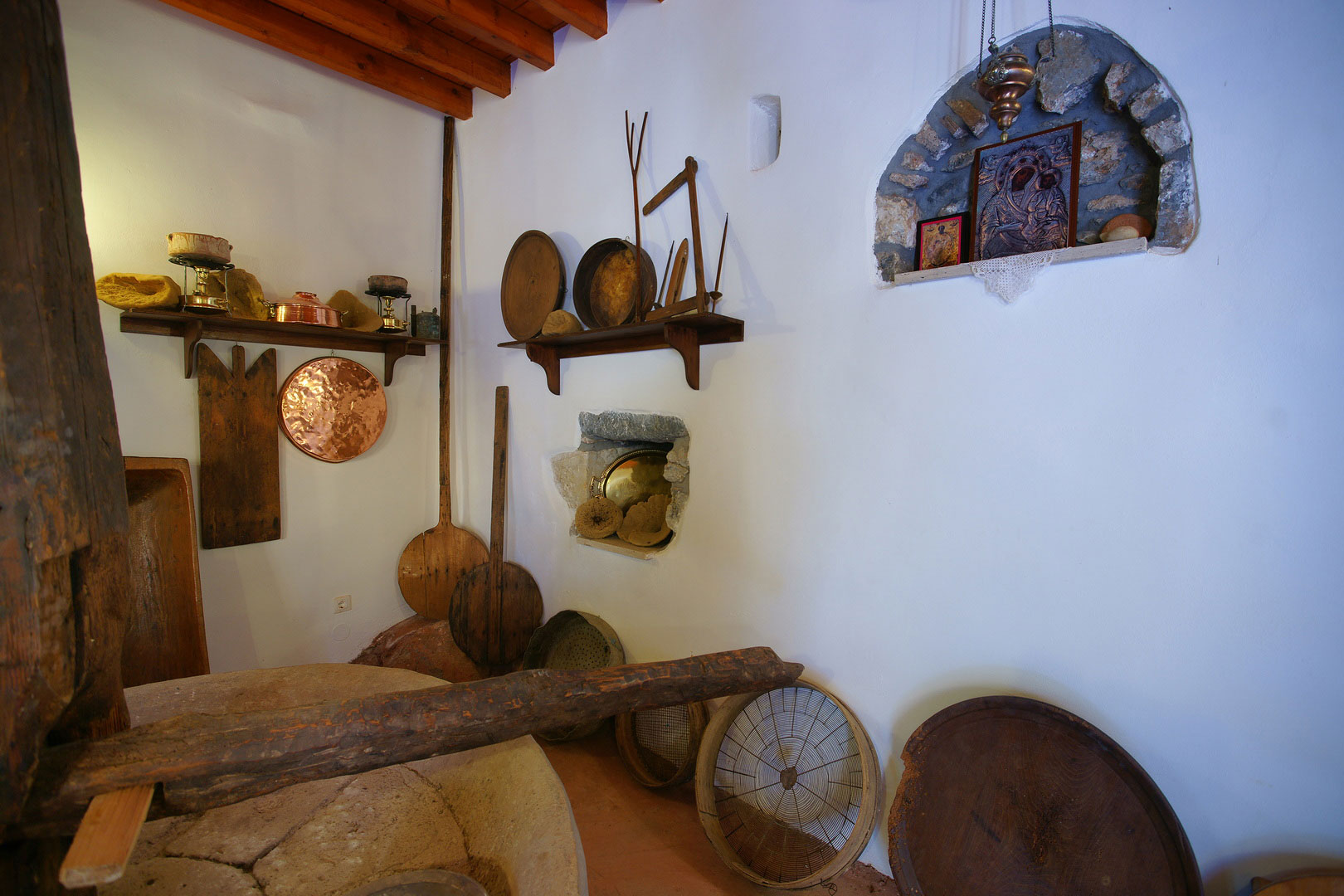
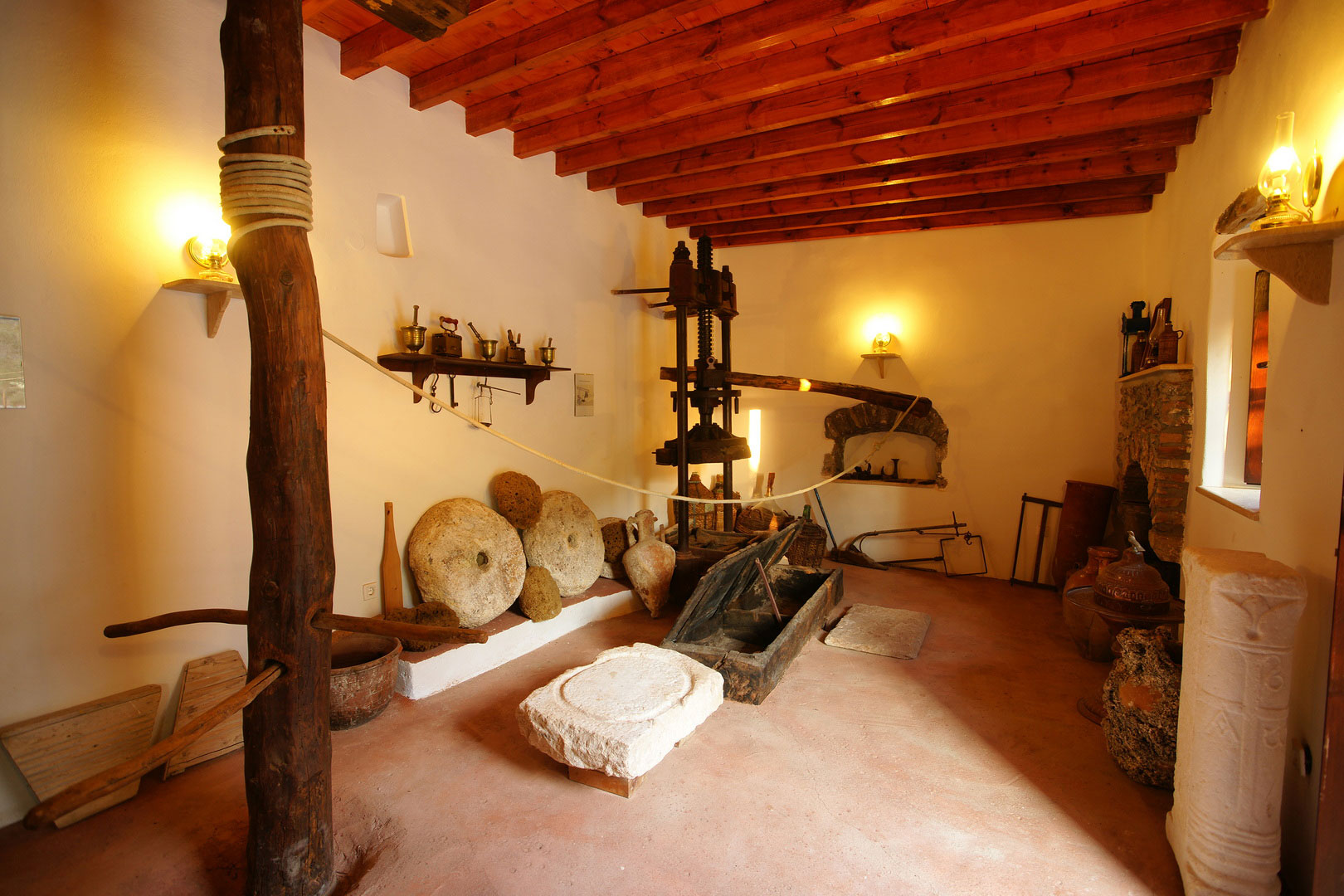
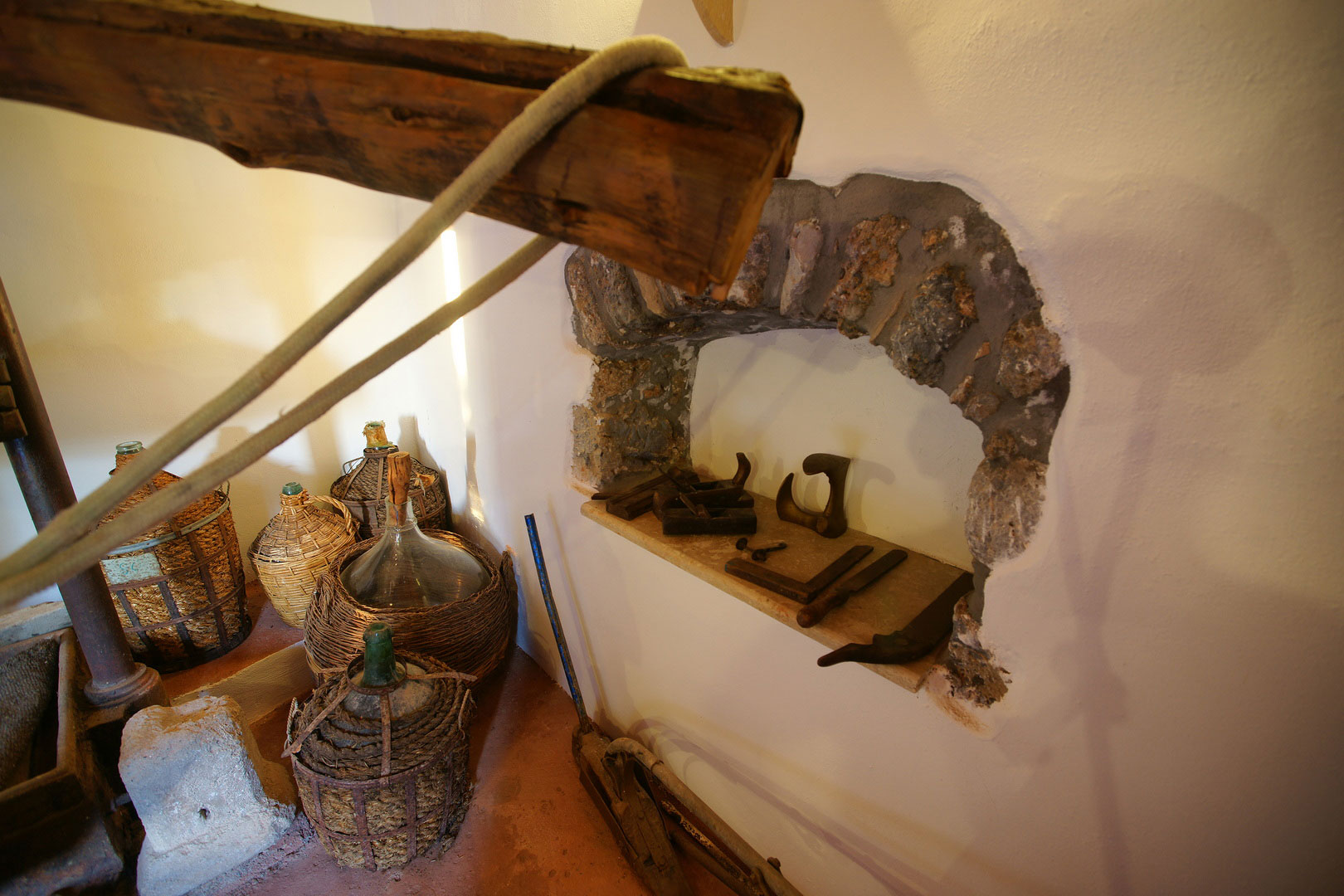
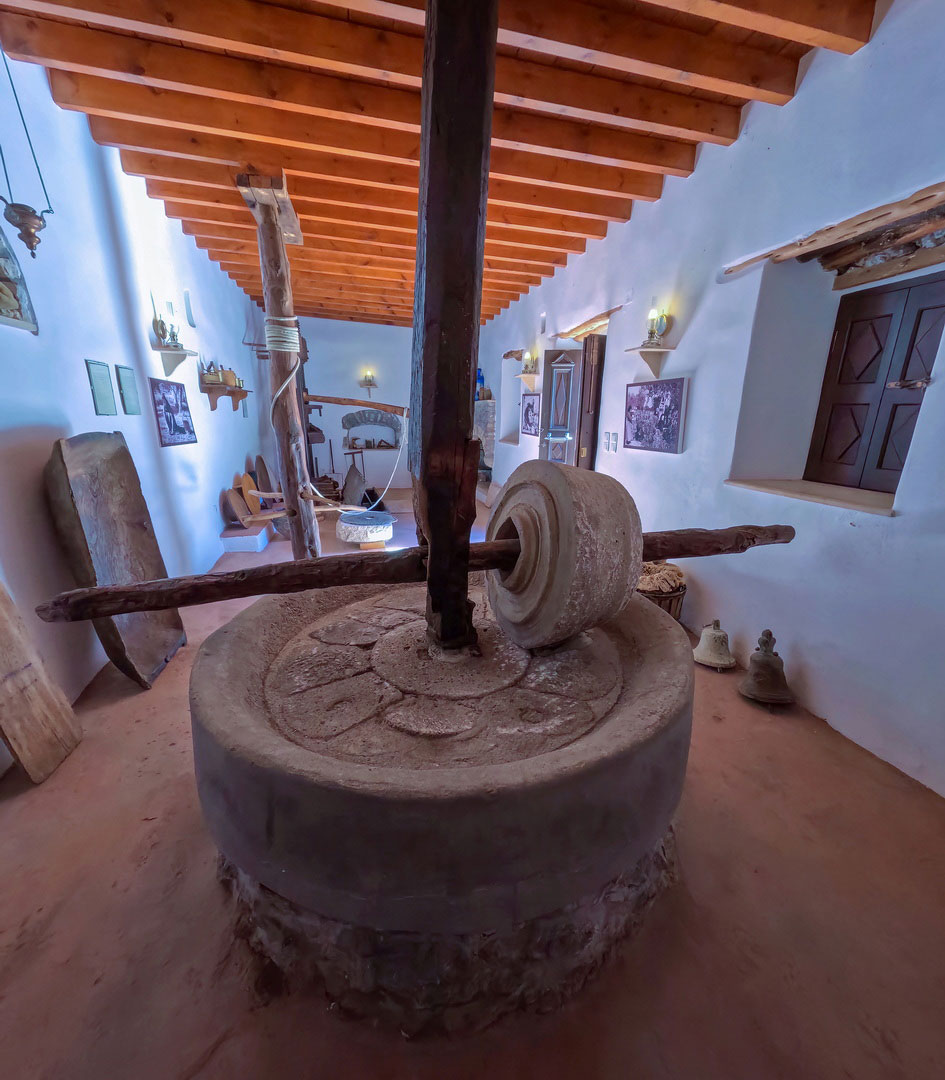
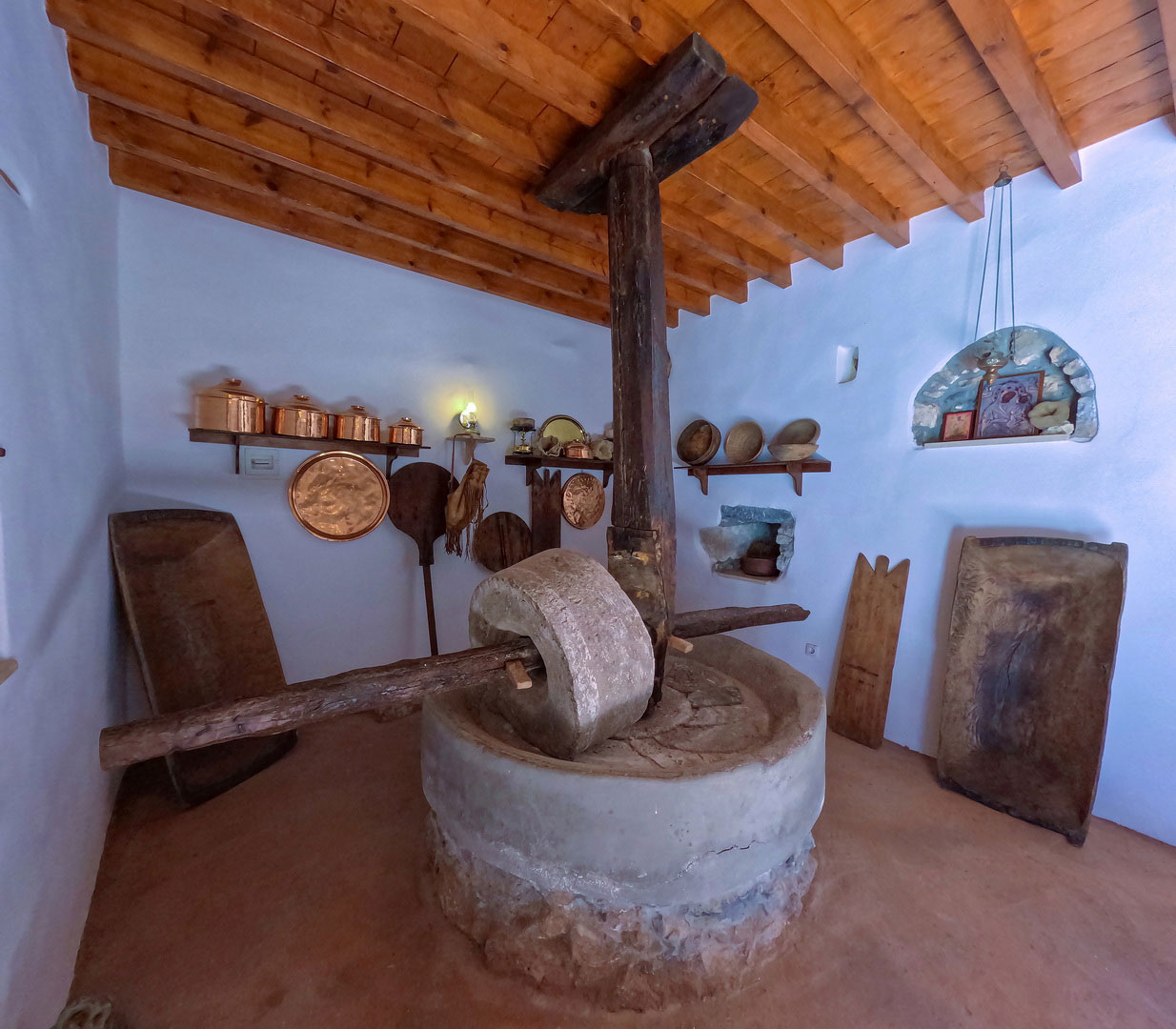
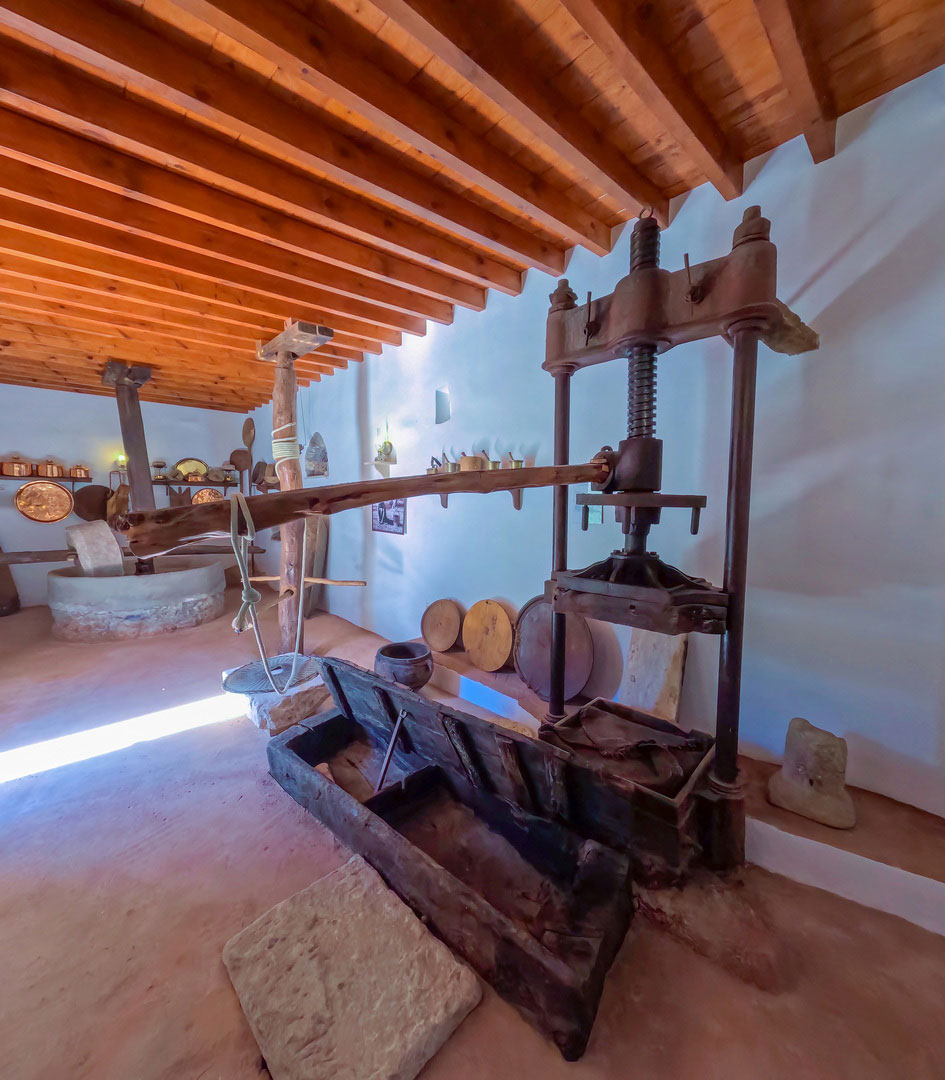
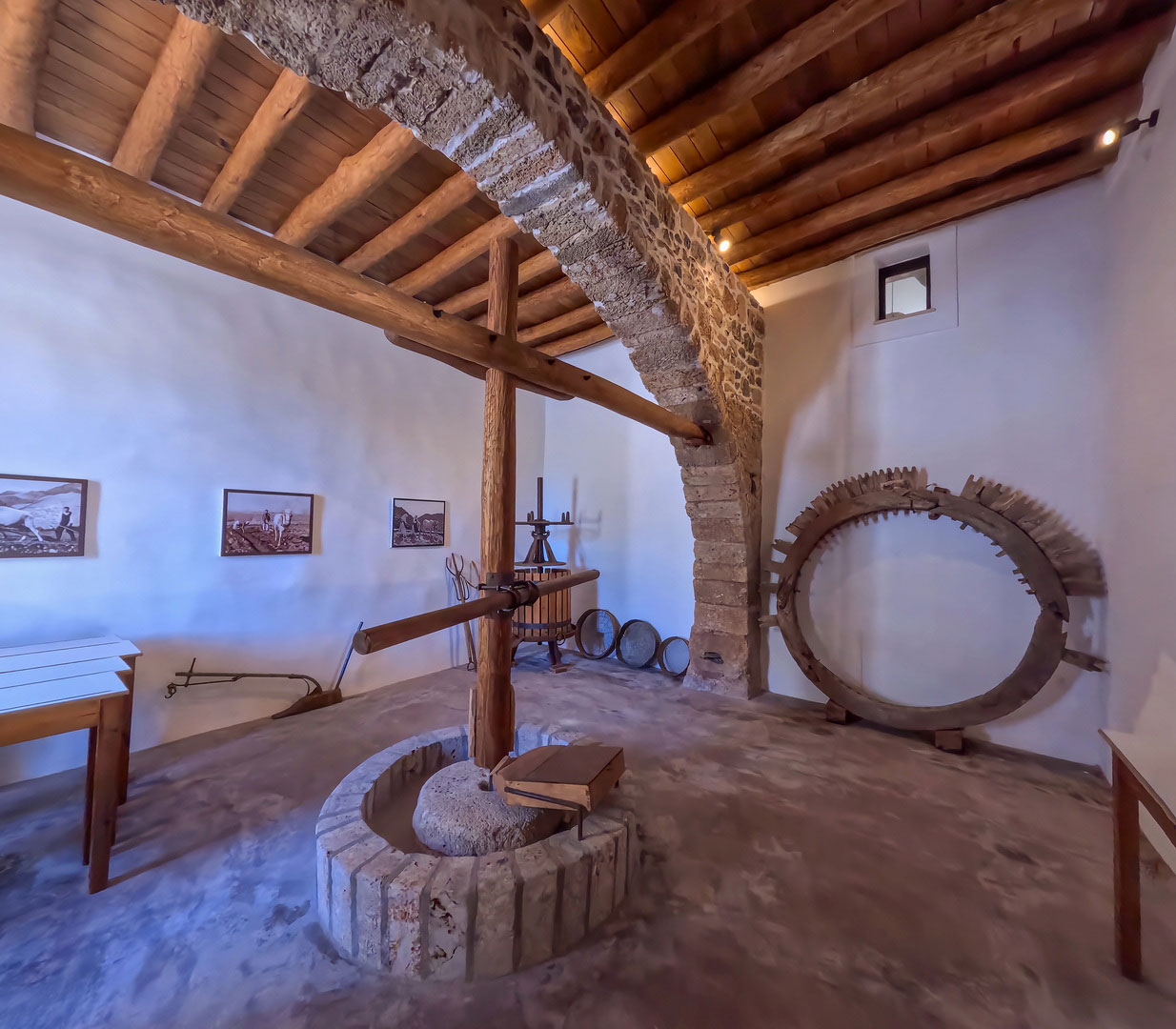
In 2010, under the supervision of the priest Apostolos Chatzinikolaou, extensive conservation and restoration works were carried out on the building complex of the Galatiani Monastery, including the Olive Mill, which is now an accessible museum space. Inside, its equipment is preserved in good condition, including the monolithic olive mill and the oil extraction system using a manual iron olive press.
Remains of earlier olive oil production mechanisms from the early 19th century are also preserved. These include a stone cylinder and a flat stone slab for crushing the olives, as well as a monolithic olive press counterweight for compressing the olive pulp. Documents from 1815 and 1817 inform us that these were constructed by the Abbot of the Galatiani Monastery, Hieromonk Makarios.